At A Glance
- India generates significant crop residue—much of which is still burned instead of recovered.
- CBG plants turn agricultural residue into renewable fuel and organic manure.
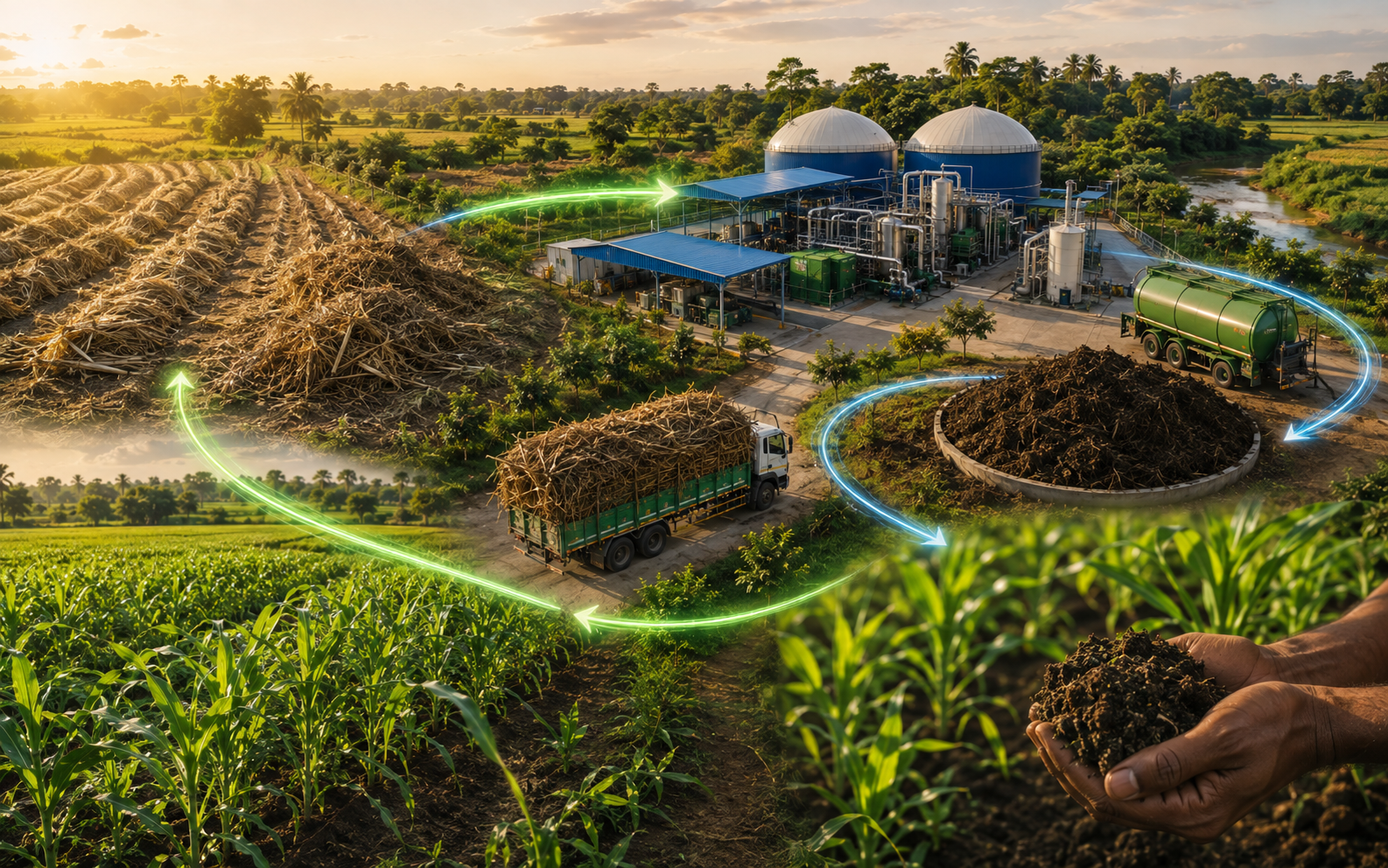
- This creates a circular cycle: farm residue → fuel + fertilizer → farm.
- Farmers can gain an additional income stream by supplying residue to CBG plants.
- Sai Bioenergy’s 3F™ model converts feedstock into Fuel and Fertilizer, supporting cleaner energy and sustainable agriculture.
What Is a Circular Economy? How CBG Turns Waste into Energy
Think about what happens after a rice harvest. The rice is collected and used, but what happens to the straw left behind? In many cases, it is simply left in the field or burned as stubble.
This is how a linear economy works: make, use and discard. A resource is used for its intended purpose and then treated as waste.
According to MNRE sources on agricultural residue, India generates around 500 million tonnes of crop residue every year, with approximately 92 million tonnes burned annually. These figures show why better agricultural waste management and resource recovery are important.
This system limits resource efficiency and leaves valuable agricultural resources unused.
What if Waste Goes the Extra Mile?
Here is where the idea of a circular economy in India comes in. A circular economy focuses on keeping resources in use, recovering their value and returning useful materials to productive systems instead of treating them as waste.
- Farm residue as a resource: Instead of burning or discarding paddy straw after harvest, farmers can sell the agri-residue to a CBG plant.
- Waste becomes energy: The CBG plant converts suitable agricultural residue into Compressed Biogas (CBG), a renewable energy source, while also producing fermented organic manure.
- Manure returns to the field: Once processed, the manure can be used as biofertilizer in agriculture, giving the residue another useful purpose.
- A Circular flow: What comes from the field can eventually goes back. This keeps resources in use while giving farmers an additional income opportunity.
According to the Ellen MacArthur Foundation, a circular economy is regenerative and restorative.
Linear and Circular Economies: What is the Difference?
| Stage | Linear Economy | Circular Economy |
| Approach | Take → Make → Use → Dump | Reduce → Reuse → Recover → Regenerate |
| Resource Efficiency | Low; single-use cycle | High; materials stay in active circulation |
| Waste Management | Crop stubble → field burning | Crop stubble → Compressed Biogas + Biofertilizer |
| Economic Outcome | Disposal costs & pollution | Waste to wealth: extra income + lower input costs |
A linear model stops once a resource has served its intended purpose. A circular model looks at how that resource can be put to further use.
Is the Circular Economy Really Beneficial?
CBG from agri-residue is a renewable source of energy that demonstrates the circular economy in practice. It reduces the amount of agricultural residue available for burning, reuses it for CBG generation, recovers value through biofertilizer, and supports soil health. This can help farmers and rural communities while supporting sustainable agriculture.
Supplying this agri-residue to CBG plants gives farmers a dual role: Annadata (food providers) and Urjadata (energy providers).
What Role Does Sai Bioenergy Play?
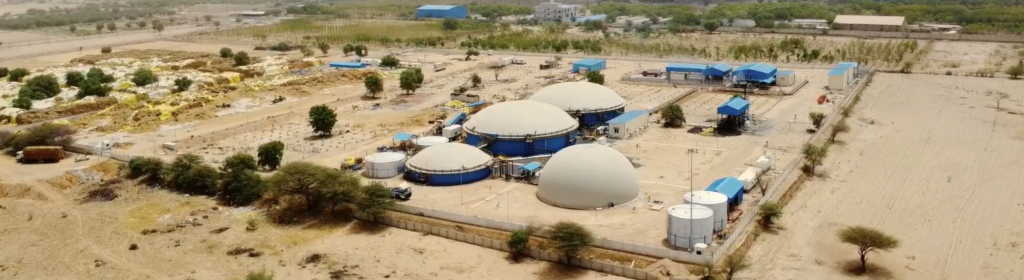
Sai Bioenergy demonstrates this circular approach at its Bikaner, Rajasthan plant through a straightforward 3F™ model: Feedstock → Fuel → Fertilizer, with agricultural residue converted into CBG as fuel and fermented organic manure as a valuable agricultural input.
Depending on the type and quality of feedstock, approximately 8–14 kg of feedstock can yield 1 kg of CBG. The process also generates several valuable co-products, including fermented organic manure (biofertilizer) in wet form, at approximately 1.4 kg for every 1 kg of feedstock processed.
CBG offers a way to turn agricultural waste into renewable energy and valuable agricultural inputs, creating a cycle that benefits farmers and supports subsequent harvests.
Want to learn more about the Biofuels eco-system? Explore more such insights.