
At A Glance
- Modern CBG plants are designed to control odour.
- Covered storage helps prevent bad smells.
- Sealed tanks and closed pipelines limit exposure.
- H₂S scrubbing removes the rotten-egg smell from biogas.
- Regular cleaning, maintenance, and monitoring support odour control.
- Sai Bioenergy’s Bikaner plant has reported no odour complaints from nearby residents.
Does a CBG Plant Smell? How Modern Plants Control Odour
One of the first questions people ask when a CBG plant is proposed near them is: Will it smell? This is a real concern and needs fact-based answers.
If you live near farmland or areas where organic waste, such as organic municipal solid waste or sugarcane waste, is handled, you may have encountered foul odour. So, if a CBG plant is planned nearby, a natural question arises: will the CBG plant smell during operations?
Can Modern CBG Plants Mitigate Odour?
Yes. Modern CBG plants can manage odour through a controlled process:
- Proper handling of organic material
- Controlled digestion
- Limited exposure during processing
- Controlled storage
- Regular monitoring and maintenance
Together, these practices support effective odour control during normal plant operations.
Does Daily Plant Operation Matter?
Yes. Even well-designed systems depend on workers consistently following the plant’s procedures.
- Following operating procedures: Workers follow defined procedures while handling materials and running different stages of the plant.
- Quick response to issues: Workers address spills, unusual conditions, or equipment problems to prevent them from affecting the surrounding areas.
Good operating discipline helps the plant’s systems work as intended and supports effective Pollution Control.
What Can We Learn from Sai Bioenergy’s Bikaner Plant?
Sai Bioenergy’s Bikaner CBG plant provides a practical example of odour management during regular plant operations.
Odour control in a modern biogas plant involves a set of practices:
1. Covered raw material: The plant keeps raw material covered to protect it from weather and help prevent bad smells.
2. Controlled digestion: In Anaerobic Digestion, waste breaks down without oxygen inside sealed designated tanks to create biogas.
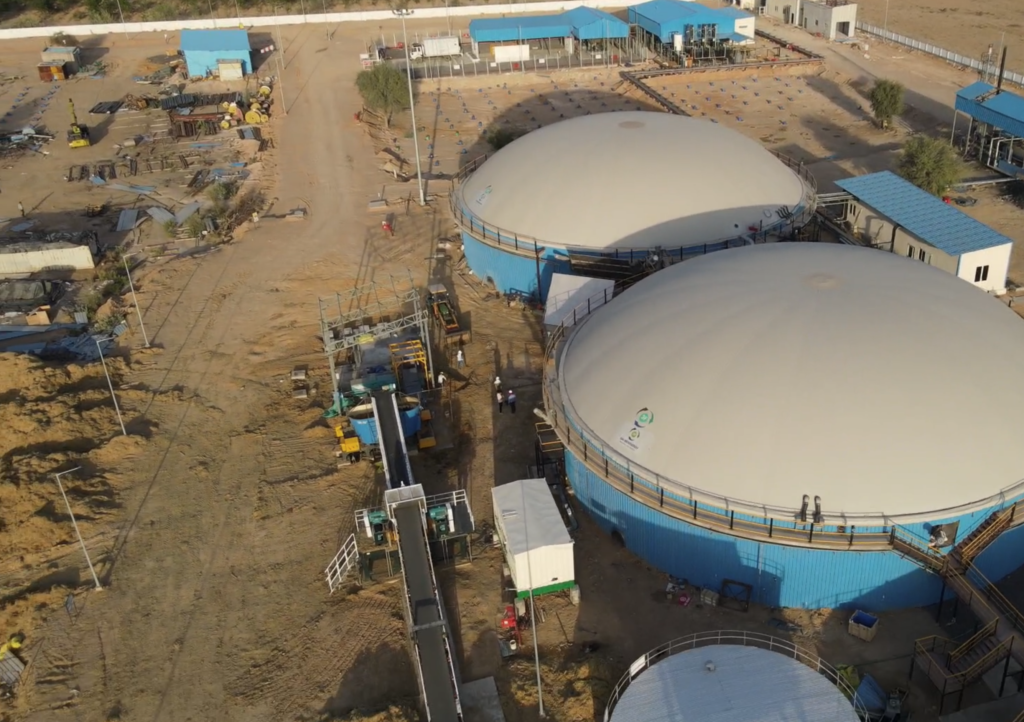
3. Enclosed handling: Biogas and liquid material are processed through closed pipelines and storage tanks.
4. H₂S scrubbing: Raw biogas produced after digestion contains methane, carbon dioxide and other gases, including hydrogen sulphide (H₂S), which has a characteristic rotten-egg smell. Sai Bioenergy uses an in-house patented H₂S scrubbing technology – our partner, Atrium Innovation’s SulfaClean – to remove H₂S before purification. The treated gas is then processed to produce CBG with ≥ 98% purity.
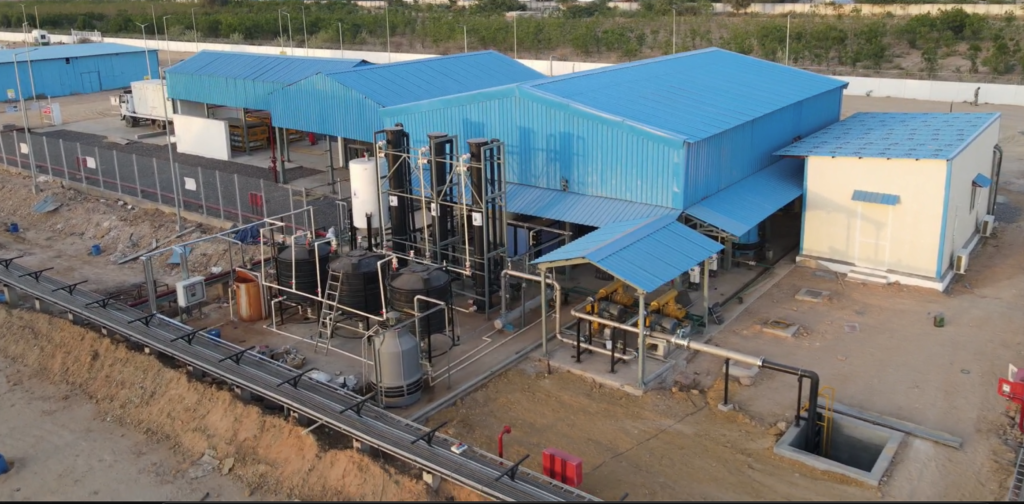
5. Separation after processing: The plant separates solid and liquid portions after digestion. The solid part goes for drying and further processing, while the liquid part goes to closed storage tanks.
6. Routine housekeeping: Regular cleaning and maintenance of the plant’s working areas help keep them clean and prevents spilled material from lingering around the facility.
Sai Bioenergy has hosted village representatives and farmers to see the plant and understand how it works. The plant is located within 200 meters of a power plant, where more than 500 people work round the clock, and more than 200 reside in staff quarters. Since the plant began operations, people living in the surrounding area have not reported complaints about biogas plant odour.
What Does the Community Want to Know?
Open and honest communication addresses community concerns. Information on raw material storage, post-digestion handling, maintenance and daily operations help the community understand the facility and its environmental safety practices.
Interested in exploring more about the Biofuels Eco-system? Read more such insights.