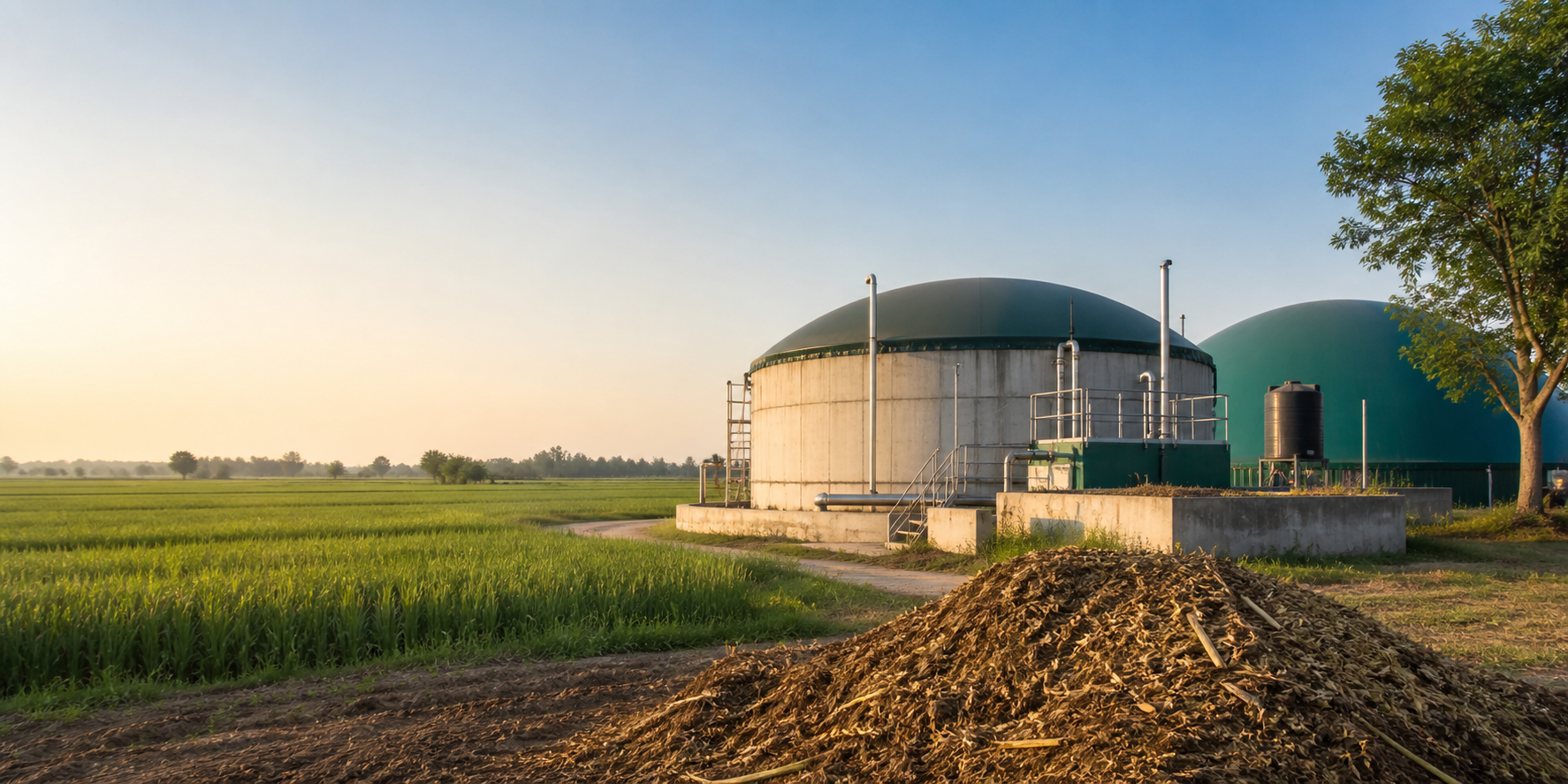
GOBARdhan gives India’s circular bioenergy ambitions a national push
India is placing organic waste at the centre of its energy and rural development strategy with the approval of GOBARdhan, the National Circular Bioenergy Scheme.
Approved by the Union Cabinet on August 6, 2026, the scheme has a total outlay of ₹23,731 crore and will be implemented from FY 2026–27 to FY 2035–36. Its central objective is to scale up compressed biogas (CBG) production and establish it as an important part of India’s future energy mix.
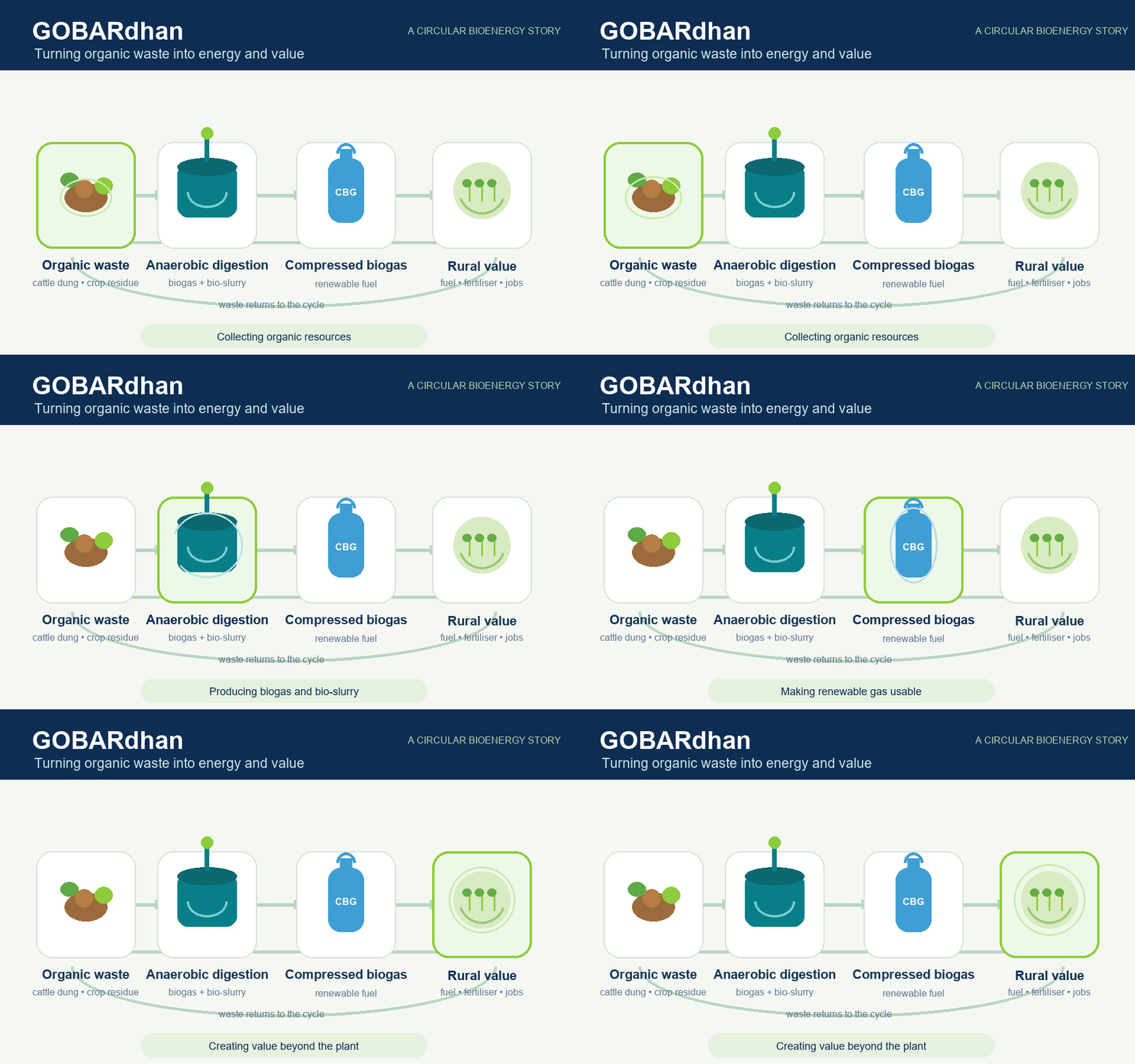
GOBARdhan — short for Galvanizing Organic Bio-Agro Resources Dhan — was first launched in 2018 under the Swachh Bharat Mission (Grameen). The initiative originally focused on converting cattle dung, crop residue, kitchen waste and other organic material into biogas and bio-slurry.
The expanded national scheme is designed to bring greater coordination and investment to the CBG sector. Compressed biogas is chemically similar to natural gas and can be used in transport, households, industry and commercial applications. By producing it from renewable organic resources, India can reduce its dependence on imported fossil fuels while creating value from waste.
The programme brings together several measures intended to make CBG projects more commercially viable. These include assured offtake through City Gas Distribution companies, a government-supported pricing framework, capital assistance for eligible projects, pipeline connectivity, credit guarantee support and funding for technology and ecosystem development.
The scheme also establishes demand targets for CBG in the transport and domestic PNG segments. The notified obligation is set at 3% in FY 2026–27, rising to 4% in FY 2027–28 and 5% from FY 2028–29 onwards.
Beyond energy production, GOBARdhan is expected to support a wider rural economy. CBG plants can create demand for cattle dung, agricultural residue and other organic waste, generating opportunities for farmers, biomass aggregators, transport providers, plant operators and organic-manure producers.
The government aims to increase domestic CBG production nearly ten-fold over the next decade. Its projections also include attracting private investment, reducing fossil-fuel consumption, creating employment and increasing the production of organic fertiliser.
The success of the programme will depend on reliable feedstock collection, efficient logistics, suitable infrastructure and consistent project execution. If these elements develop at scale, GOBARdhan could help connect waste management, clean fuel production and rural economic growth within a single circular bioenergy ecosystem.
Source: Press Information Bureau, Government of India; background reporting by Fortune India.