
Can Compressed Biogas Deliver Equivalent or Higher Mileage Than CNG?
If you are a CNG driver considering a switch to CBG, you are probably wondering: does CBG give the same vehicle mileage? The confusion often comes from treating raw biogas, Gobar Gas and CBG as the same fuel. Raw biogas is a mixture of methane and other gases produced from organic matter. Gobar Gas is biogas produced from cattle dung, while CBG is upgraded and purified biogas with a much higher methane content and fewer impurities, making it suitable for use as a fuel.
CBG Basics: Different Feedstocks, One Refined Fuel
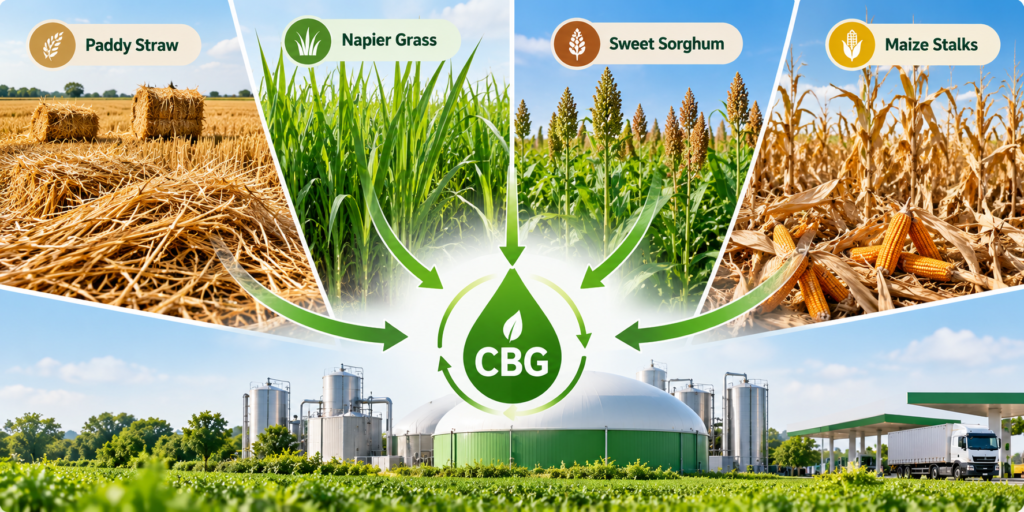
Biogas production can use organic sources like crop residues and energy crops, and it’s usually a mixture of methane and other gases. People may associate CBG with gobar gas because traditional biogas is commonly associated with cattle dung. Upgrading and purifying biogas increases its methane content and removes other compounds. These separated components can be used as by-products such as carbon dioxide, biofertilizer and nitrogen, so nothing goes to waste.
A simple distinction like gas source doesn’t explain CBG vs CNG mileage. The properties and composition of the final automotive fuel matter a lot for how well a vehicle runs.
What’s All the Fuss About Calorific Value?
Calorific value measures the total energy you can get from burning a certain quantity of fuel.
Because CNG and CBG are mainly methane, their energy content depends on methane concentration and other gas constituents. Therefore, topics like CBG mileage and fuel efficiency can’t be isolated from methane purity and overall fuel quality.
Do the Differences Between CNG and CBG Fuel Translate into More or Less Economy?
Vehicle mileage results from multiple factors. Fuel is one of them, but others include driver behaviour, traffic, the vehicle, tyres, the road, and maintenance.
City driving, characterised by frequent speed changes and stops, reduces fuel efficiency for both CNG and CBG vehicles.
What’s the Evidence Based on?
A 2024 SAE study comparing CBG and CNG in BS-VI-compliant three-wheelers and passenger cars found comparable fuel economy, power, and acceleration under the tested conditions.
Given these enginesfuelled by CBG performance factors, scientific testing and real data collection are the best way to proceed.
Can CBG Be Used with CNG Vehicles?
Fuel-grade CBG is essentially cleaned and upgraded biomethane. Whether the fuel is compatible with vehicles depends on whether it meets fuel-quality regulations such as IS 16087:2025 for biogas/biomethane and the relevant automotive requirements under IS 15958:2023.
CBG can be made from different feedstocks, including crop residues and energy crops. When biogas from these sources is upgraded and purified to meet fuel-quality requirements, it is also called Bio-CNG. As a renewable transport fuel and an alternative fuel, CBG is a key part of green mobility. Bio-CNG performance must be considered alongside fuel quality and vehicle condition.
How Does Sai Bioenergy Ensure CBG Quality?
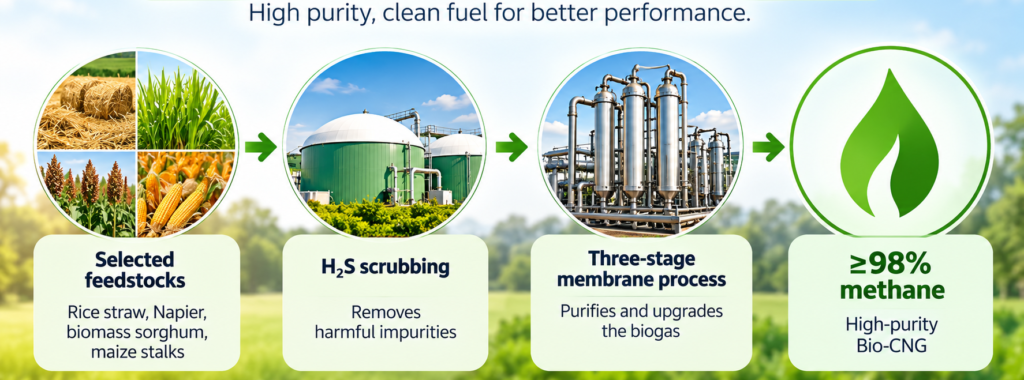
Sai Bioenergy produces Bio-CNG from rice straw, Napier, biomass sorghum, and maize stalks; these are highly selected energy crops and feedstocks with high methane content. It then scrubs H₂S and purifies it through a three-stage membrane process. It states that its CBG contains methane at levels of 98% or higher. This high purity is a key reason Sai Bioenergy has achieved CBG mileage comparable to CNG. High purity means higher methane content in the fuel, which increases energy availability and, consequently, CBG mileage.
The Takeaway
CBG should not be assumed to provide lower mileage than CNG simply because it is produced from biomass. CBG mileage depends on fuel quality, vehicle condition, driving conditions, load, and CBG maintenance. A fair comparison between CBG and CNG requires controlled testing, uniform conditions and reliable fuel-quality data.
Want to read more about the biofuels eco-system? Head to our Insights page to explore more.