
Can All CNG Vehicles Run on CBG? Understanding Vehicle Compatibility
If you already use Compressed Natural Gas (CNG), you may have heard about Compressed Biogas (CBG) and wondered if you can use it in your vehicle too. As CBG becomes a popular alternative transport fuel, more vehicle owners are becoming curious about using it in their CNG vehicles. So, how does it work?
What Is Automotive CBG?
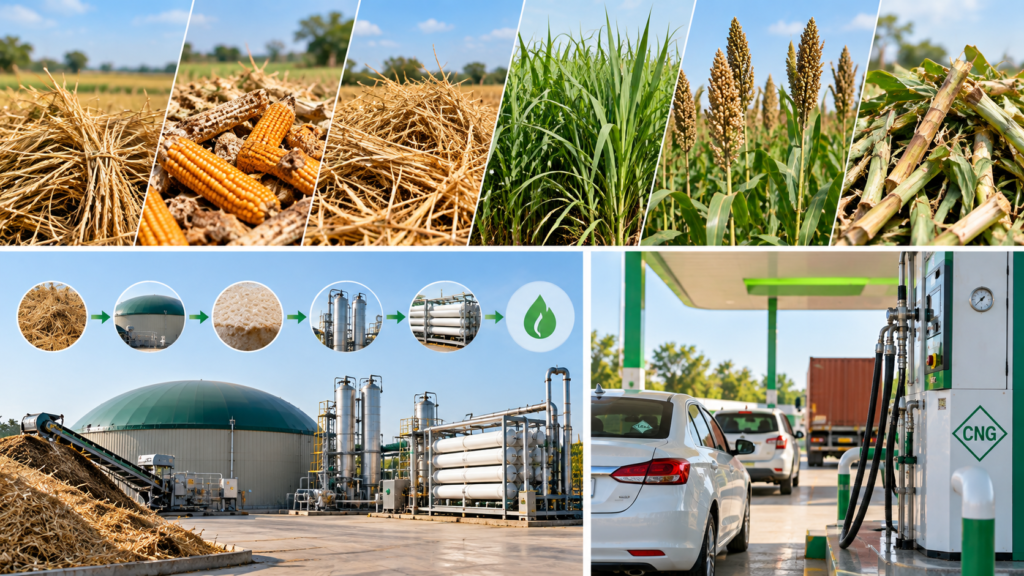
Compressed Biogas (CBG), also known as Bio-CNG, is made from organic biomass. It is different from gobar gas which is manufactured from cow dung. CBG is manufactured from feedstock which includes agricultural waste like Paddy straw, Corn Cobs, Wheat straw and Energy Crops like Napier Grass, Sweet Sorghum and Maize crops. These are high in methane content.
When the feedstock is fed to the digester, the resultant gas is called Raw Biogas. It contains only 45-50% methane. Vehicles cannot use raw biogas directly. It must first be cleaned and purified. This removes unwanted gases and increases the methane content. The gas is then compressed for use as vehicle fuel.
For automotive CBG, fuel quality is important. It needs to comply with the applicable CBG fuel standards under IS 16087:2025. As a renewable natural gas, CBG must be properly purified before it is used as vehicle fuel.
Can CNG Vehicles Run on CBG?
The quality of the CBG matters, so does the vehicle itself. The fuel must meet the applicable standards, and the vehicle’s fuel system must be compatible with it. In this context, CBG and Bio-CNG refer to the same purified biomethane fuel.
This is where engine compatibility comes in. Before using CBG, vehicle owners should check CBG vehicle compatibility. They should also get the fuel from an authorised and reliable supplier.
Do CNG Vehicles Need Modification?
Myth: CBG always requires modifications to a CNG vehicle.
Fact: A CNG vehicle may not need major changes to use compliant automotive CBG. The CNG vehicle fuel system should be compatible with the fuel being used. Avoid unnecessary changes to the vehicle or its fuel system.
Why Does Fuel Quality Matter?
Fuel quality matters as much as its source. Bio-CNG vehicles need fuel with the right composition to operate reliably.
Automotive-grade CBG needs good methane content. Moisture and unwanted gases also need to be controlled. CBG goes through several purification stages before it reaches the vehicle.

The relevant biomethane specification covers methane, carbon dioxide, nitrogen, oxygen, hydrogen sulphide and moisture. Keeping these parameters within the specified limits helps maintain consistent fuel quality. Good fuel quality also supports clean mobility and green mobility.
How Sai Bioenergy Produces CBG
Sai Bioenergy produces CBG from renewable biomass. Its feedstock includes rice residue, Napier, biomass sorghum and maize stalks.
The process involves steps:
- Feedstock: These materials are used to produce raw biogas.
- H2S removal: H2S is removed from the raw biogas through an H2S scrubbing system.
- Membrane purification: The gas passes through three stages of membrane purification before being compressed into automotive CBG.
According to the company, the process produces CBG with 98% methane content against the required compliance of >95% methane purity. The process also produces digestate, which can be further processed into organic fertilizer.
To learn more about our biofuel solutions, visit our Biofuels Solutions page.
Choosing Quality-Assured CBG
Where you get your CBG from matters. Vehicle operators should choose authorised refuelling stations that provide quality-assured CBG.
That way, they know they are getting fuel intended for automotive use.
The Bottom Line
CBG can be a practical option for CNG vehicle owners when the fuel and vehicle are compatible. As CBG becomes more accessible, it can support India’s move toward cleaner transportation.
Want to know more about how CBG and CNG differ? Read our CBG vs CNG blog.