
Sai Bioenergy Private Limited: The Genesis
Biofuel
The global vision towards sustainability and having a resilient energy future, has significantly increased the demand for renewable and environmentally responsible energy sources. As nations strive to reduce greenhouse gas emissions, enhance energy security, and transition away from fossil fuels, sustainable energy solutions have become a central priority in economic and environmental policies.
These fuels can take multiple forms, such as biogas and compressed bio-gas (CBG), Di-methyl Ether, liquefied bio-methane, and advanced biofuels like green methanol. Through advance processes such as fermentation, anaerobic digestion, and thermochemical conversion, biomass can be transformed into energy that can be used for transportation, power generation, and industrial applications.
Our Projects
We plan to cultivate varieties of energy crops over a land bank of 20,000 Hectare in Chhattisgarh, Maharashtra, Rajasthan, Telangana, Andhra Pradesh, Karnataka & Madhya Pradesh states of India that will serve as feedstock for producing Compressed Bio Gas (CBG), Liquified Biomethane (LBM), and other biofuels. These biofuels will help meet the rising demand for clean and sustainable energy in select states of India.
A. Rajasthan (Bikaner)
Agriculture
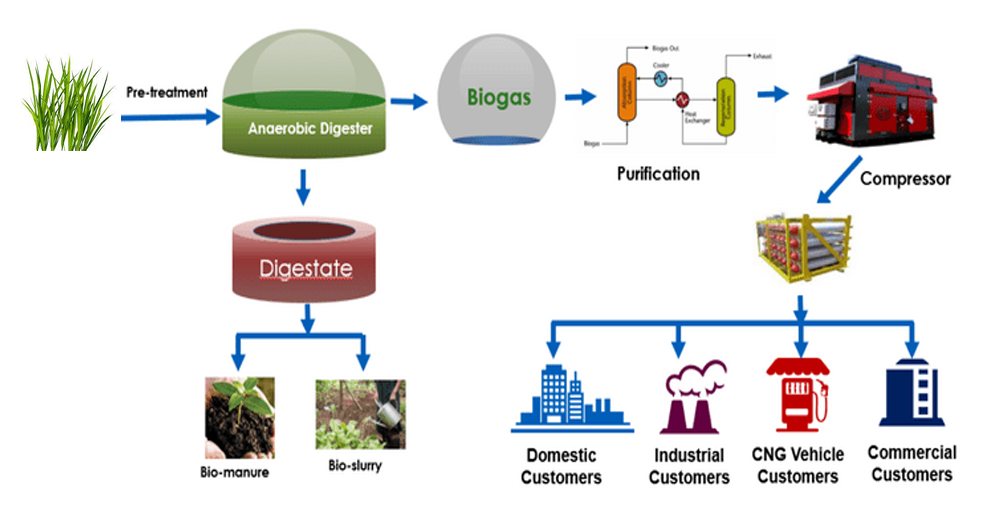
One promising pathway for CBG production is the use of Napier grass, also known as elephant grass. Napier grass is a high-yielding perennial crop that grows rapidly in tropical and subtropical climates, making it particularly suitable for large-scale biomass production. Its high biomass productivity, ability to grow on marginal land, and multiple harvest cycles per year make it an efficient and reliable feedstock for biogas generation.
CBG Plant
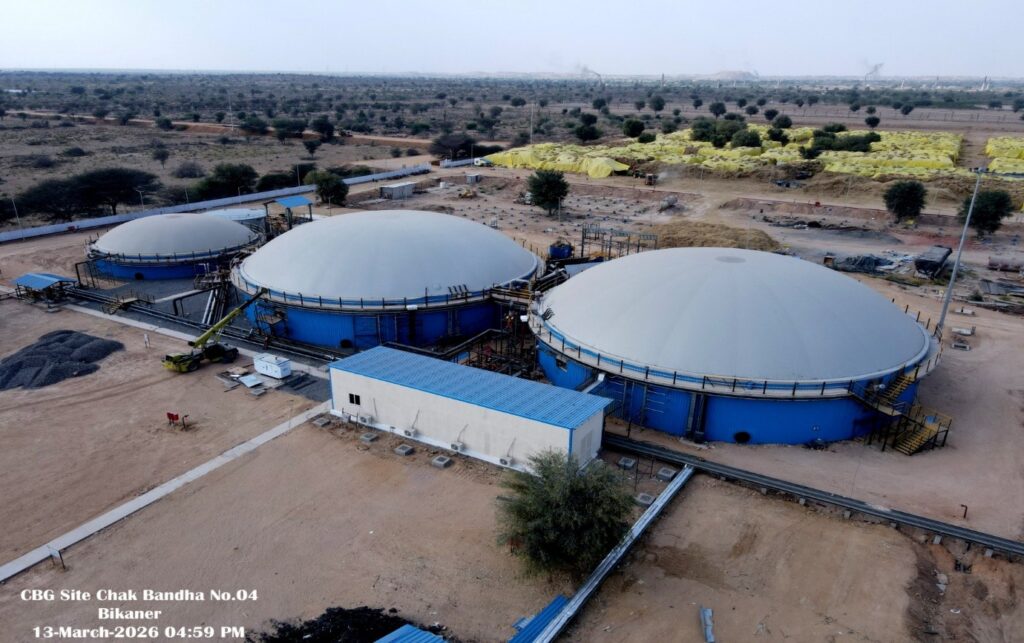
With a production capacity of 20 tonnes per day CBG with CSRT and PFR technology from cultivated Napier grass, it offers several advantages. The plant was commissioned on 26th February 2026 and is under operation since then. It ensures a consistent and controllable feedstock supply, reduces reliance on seasonal agricultural residues, and enables large-scale, continuous biogas production. Additionally, the by-product from the digestion process, bio-manure or bio-slurry, can be used as an organic fertilizer, improving soil health and supporting sustainable agricultural practices.
B. Chhattisgarh
Sai Bioenergy Chhattisgarh Private Limited was incorporated on 21st July 2025 with the vision of setting up Compressed Biogas (CBG) plants with an aggregate capacity of 150 TPD across several districts in Chhattisgarh including Durg, Khairagarh, Rajnandgaon, Mungeli, Janjgir-Champa, and nearby regions.
As of now, SBPL has finalised/acquired land in Khairagarh-Chhuikhadan-Gandai and Durg district for setting up 30 tpd and 20 tpd CBG plant respectively, and is in process to identify 1,500 hectares of agricultural land in nearby areas to grow energy crops that will be used as feedstock in these CBG plants. SBPL is also in process to identify another 3,000 hectares of agriculture land to meet feedstock requirement of entire proposed CBG plant capacity in State.
C. Maharashtra
Sai Bioenergy Maharashtra Private Limited was incorporated on 28th August 2025 with the vision of setting up Compressed Biogas (CBG) plants with an aggregate capacity of 250 TPD across several districts in Maharashtra Solapur, Nagpur, Nashik, Ahilyabai Nagar, Pune, Satara, Sambhaji Nagar, and nearby regions.
As of now, SBPL has acquired 25 acres of land in Solapur to setup 30 TPD CBG plant. SBPL has also acquired 1,537 hectares of agricultural land across Solapur, Sambhaji Nagar, Nashik, Pune & Ahilyabai Nagar districts to grow energy crops that will be used as feedstock in nearby CBG plants. SBPL is also in process to identify another 6,000 hectares of agricultural land to meet feedstock requirement of entire proposed CBG plant capacity in State.
Ongoing Projects on Biofuels
Ongoing projects in Renewable Dimethyl Ether (rDME), Liquefied Bio-Methane (LBM), and Green Methanol are focused on advancing low-carbon fuel solutions to support the transition toward sustainable energy systems. Currently in the implementation phase, these initiatives involve feedstock assessment, technology selection, and process integration to ensure efficiency and scalability. By utilizing sustainable biomass and organic waste streams, the projects aim to produce clean fuels with significantly lower emissions. Upon completion, they are expected to contribute to energy diversification, enhance supply security, and provide reliable green fuel alternatives for industrial and transportation sectors.
Energy Storage
Vanadium-ion Systems or Flow-battery Solutions
The organization is currently undertaking research and development in Vanadium Redox Flow Battery (VRFB) technology, an advanced electrochemical energy storage solution designed for large-scale and long-duration applications within Battery Energy Storage Systems (BESS). This initiative aligns with the growing demand for reliable, safe, and scalable energy storage systems to support renewable energy integration and grid stability.
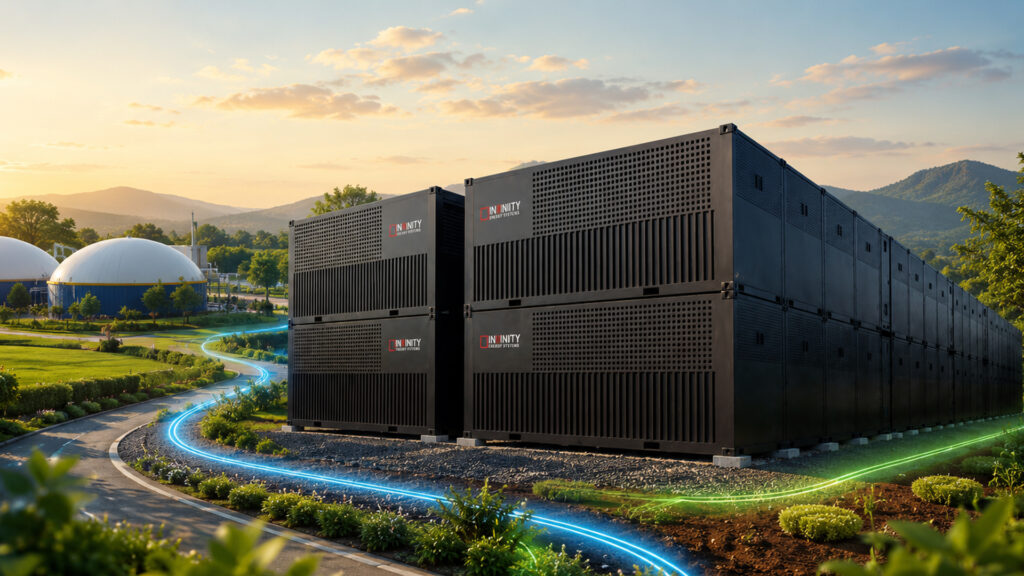
VRFB technology utilizes vanadium ions in multiple oxidation states (V²⁺, V³⁺, V⁴⁺, V⁵⁺) dissolved in liquid electrolytes to store and release energy through reversible electrochemical reactions. With a cell voltage ranging between 1.15–1.55 V, system efficiency of 70–85%, and a cycle life exceeding 15,000 cycles, VRFB systems offer a lifespan of over 20 years. A key advantage of this technology is its ability to operate at 100% depth of discharge without performance degradation, making it highly reliable for continuous and intensive usage.
The R&D focus is on optimizing system design, improving cost efficiency, and enhancing performance parameters to enable wider commercial deployment. VRFB offers significant advantages, including long operational life, high safety due to non-flammable electrolytes, and the unique capability to independently scale power and energy capacity. These features make it particularly suitable for integration with renewable energy sources such as solar and wind.
Quino Energy Organic Flow-battery Solutions
The organization is currently undertaking research and development in Quino Energy’s water-based organic redox flow battery technology, an advanced energy storage solution designed for commercial, grid-scale and long-duration applications within Battery Energy Storage Systems (BESS). The technology is being developed to provide 8–24 hours of energy storage, supporting renewable energy integration, grid flexibility and the management of fluctuating electricity demand.
Quino Energy’s flow battery technology uses organic molecules known as quinones, which can reversibly switch between oxidized quinone and reduced hydroquinone forms to store and release electrical energy. These molecules are dissolved in water-based electrolytes, offering a non-flammable chemistry and enhanced safety compared with many conventional battery technologies. The system also enables the independent scaling of power and energy capacity, making it suitable for applications requiring extended storage durations.
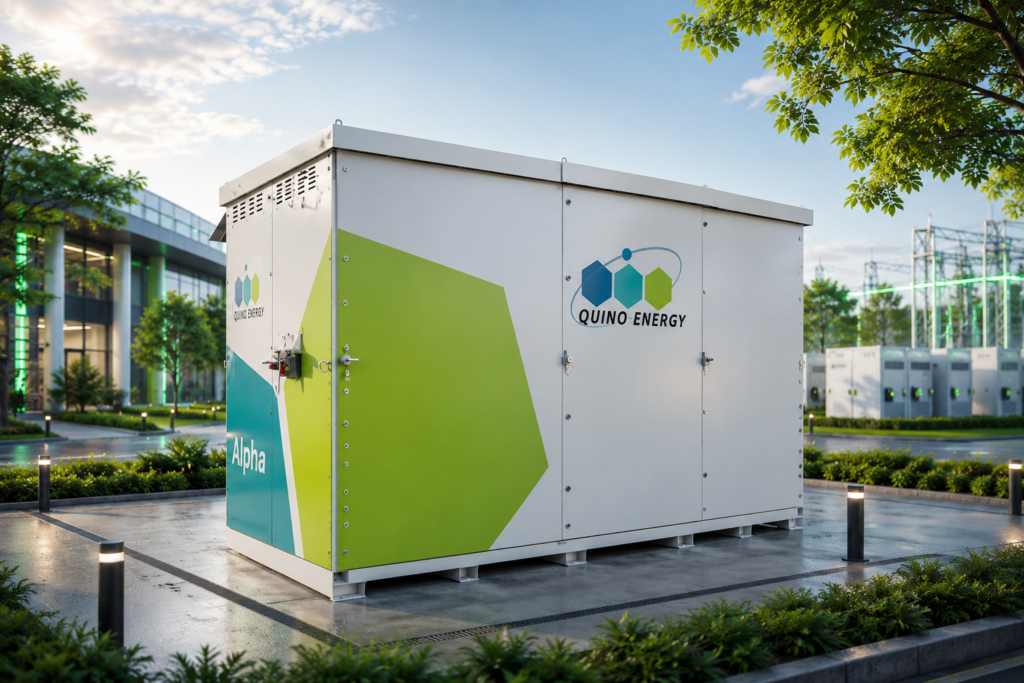
The R&D focus is on optimizing system design, improving cost efficiency and enhancing the lifetime and performance of quinone-based electrolytes to support wider commercial deployment. Key areas of innovation include the recovery of degraded quinone reactants, zero-waste production of high-performance quinones using the flow battery system itself as a production reactor, and operation without supplemental inert gas. Together, these developments are intended to reduce operating complexity, improve system reliability and enable practical, affordable long-duration energy storage for renewable energy and grid applications.
Bioenergy Innovation, Circular Economy Strategies, Sustainable Farming
India’s vision for sustainable growth is increasingly anchored in the integration of clean energy, resource efficiency, and climate-resilient agriculture. Bioenergy innovation, circular economy practices, and sustainable farming are converging as key pillars supporting this transition, guided by progressive government policies and national missions.
Bioenergy innovation in India has gained strong momentum through initiatives such as the SATAT Initiative, which promotes the production of Compressed Biogas (CBG) from agricultural residues, municipal waste, and other biomass sources. This aligns with the National Bio-Energy Mission, aimed at scaling up biomass-based power and biofuel production. Advancements in technologies for biogas upgrading, second-generation ethanol, and emerging fuels like green methanol and renewable DME are enabling more efficient and diversified bioenergy pathways.
A strong emphasis is also placed on the circular economy, where waste-to-wealth strategies are actively encouraged. Programs like GOBAR-Dhan Scheme focus on converting cattle dung and organic waste into biogas, bio-CNG, and organic fertilizers. Similarly, agricultural residue management, particularly in states affected by stubble burning is being addressed through biomass utilization for energy production, reducing environmental pollution while creating economic value.
In parallel, sustainable farming practices are being promoted to ensure long-term agricultural productivity and ecological balance. The Paramparagat Krishi Vikas Yojana encourages organic farming and reduced chemical input usage, while the National Mission for Sustainable Agriculture supports climate-resilient practices, efficient water use, and soil health management. The integration of bioenergy systems with farming such as using energy crops, crop residues, and digestate as organic fertilizer creates a closed-loop system that enhances farm incomes and sustainability. Together, these elements form a synergistic framework where bioenergy innovation supports waste utilization, circular economy strategies minimize resource loss, and sustainable farming ensures ecological balance, all reinforced by strong policy backing. This integrated approach not only contributes to India’s renewable energy targets and emission reduction commitments but also drives rural development, energy security, and a more resilient agricultural economy.